Jakarta – The Attorney General’s Office (Kejagung) has named the former President Director of PT Garuda Emirsyah Satar as a suspect in Garuda corruption which is said to have caused losses to the state of up to Rp8.8 trillion.
In this case, Emirsyah Satar is a suspect in corruption related to the procurement and leasing of CRJ 1000 and ATR 72-600 aircraft. Just like the case at the Corruption Eradication Committee, Emirsyah Satar was named a suspect by the Attorney General’s Office together with his business partner, Soetikno Soedarjo as Director of PT Mugi Rekso Abadi (MRA).
Two corruption cases involving the former CEO of PT Garuda Indonesia at the Corruption Eradication Commission and the Attorney General’s Office have also become the focus. This is because the cases handled by both the Corruption Eradication Commission and the Attorney General’s Office are considered to be mutually exclusive. It is even suspected that in this case Ne Bis In Idem applies, namely similarities in the object of the case or in other words there is repetition of cases.
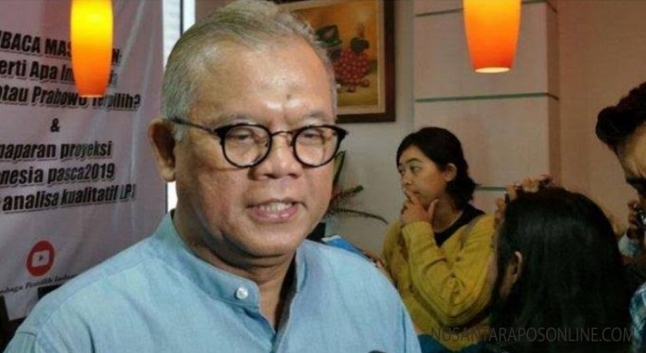
So what about the case of former Garuda CEO Emirsyah Satar? Is it true that Ne Bis In Idem is enforced by the Attorney General’s Office? Regarding this matter, a criminal law expert who is also a lecturer at the Faculty of Law, Trisakti University, Abdul Ficar Hadjar also spoke.
“(Regarding the Emirsyah Satar case) it can actually be concluded like this, from all the actions the Corruption Eradication Committee concluded that it ended in or had its core in gratification. Acceptance made by someone was related to his position which was then also qualified as part of a criminal act of corruption. What must be questioned “That’s why the Corruption Eradication Commission (KPK), when it first investigated, didn’t focus on the acts that are now being tried or taken over by the prosecutor’s office,” said Abdul Ficar Hadjar in Jakarta, Saturday, (14/10).
Furthermore, according to Abdul Ficar, if the case is traced back from the beginning, then Emirsyah Satar’s actions amount to an abuse of authority or an unlawful act that benefits individuals and harms the state, so it inevitably becomes a repetition of what the Corruption Eradication Commission has done.
“The question is why in the past the Corruption Eradication Committee (KPK) did not prosecute under Article 2 or Article 3 of the Corruption Law but preferred the gratification articles carried out by the Corruption Eradication Commission. Well, that is actually the big question,” said Abdul Ficar.
Then, he continued, the focus of the issue was whether actions that had been qualified in one particular lawsuit could be tried again.
“Because of that, we have to look at the provisions governing Ne Bis In Idem. Ne Bis In Idem is regulated in
Article 76 states that except in the case of a judge’s decision which may be repeated, a person may not be prosecuted twice for the same act, an act which a judge in Indonesia has tried against him with a decision which becomes permanent. “This means that there has been a decision regarding the act that qualifies as a criminal act and it has become permanent and has been carried out and executed,” explained Abdul.
Therefore, according to him, if there are elements of an act that has already been committed and there has been an initial decision and then it becomes a new criminal act, this could become Ne Bis In Idem. Unless the object is different.
“Perhaps if from the same series told by the legal advisor (Emirsyah Satar) there were five acts of procurement of aircraft which the Corruption Eradication Commission used as the basis for demanding gratuities and receipts, but in the Prosecutor’s indictment, according to information from the attorney, only 2 acts were used. procurement. So two of the five that have been prosecuted by the Corruption Eradication Commission. Because of that, I immediately concluded that this was actually trying an act that had already been tried,” said Abdul Ficar.
“The first indictment was based on gratuities received from 5 aircraft procurements and it turns out that the Prosecutor’s Office took two of them and then made them into new charges, the articles of which actually also coincide. Therefore, I tend (to think) that this case is actually Ne Bis In Idem “or a repetition of what has already been charged or convicted. In fact, the law already has permanent legal force and has been implemented,” he continued.
Because of this, the Trisakti University FH lecturer also considers that the trial of the second Garuda corruption case by the Attorney General’s Office is actually an act for which there has already been a verdict.
“I conclude it as Ne Bis In Idem,” he said.
He also questioned what the aim of the Prosecutor’s Office investigators was in this case, especially in the context of criminal law enforcement. Because, he said, law enforcement must be relevant to submit.
“For example, will it fulfill a sense of justice if a defendant is prosecuted multiple times or at least twice in the context of the same series of acts, by separating the prosecution of the act and the prosecution of its consequences? In a criminal act of corruption, for example, does it fulfill the sense of justice if someone State officials who have been punished for abusing their authority and accepting gifts from other people and punished with the gratification article, must be prosecuted again for unlawful acts that are detrimental to the state? Hasn’t the perpetrator been sentenced to punishment for his series of actions? This clearly violates the principle of Ne Bis In Idem,” he said.
“It seems that this incident will happen, today a former BUMN director will be tried for the second time on the basis of the same series of actions. This incident will be a touchstone for the progress of our criminal justice. Hopefully our judiciary will have the courage to make enlightening breakthroughs and exhilarating.”
It is known that Emirsyah Satar is suspected of violating Article 2 paragraph 1 in conjunction with Article 3 in conjunction with Article 18 of Law Number 31 of 1999 concerning the Eradication of Corruption Crimes in conjunction with Law Number 20 of 2001 concerning Amendments to Law Number 31 of 1999 concerning the Eradication of Criminal Acts Corruption in conjunction with Article 55 paragraph 1 of the Criminal Code.
Meanwhile, it was previously known to the KPK that the case that sentenced Emirsyah to 8 years in prison was related to bribery and gratification in the procurement of the Total Care Machine Program purchase project for the Trent Roll-Royce 700, Airbus A330-300/200, and Airbus A320 for PT Citilink Indonesia, a subsidiary of GIAA, as well as CRJ 1000 and ATR 72-600 aircraft. Red